


Previously, we wrote about the process of developing a strong name for your business or product: studying the market, clarifying positioning, generating options, and testing for conflicts. Once you have your list of names, the next question is, which option is the best option?
Don’t try to choose based on consensus, or the loudest opinion in the room, or even whether or not a name simply “feels right” on first read. A strong name earns its place by performing against real criteria. The true difficulty in naming usually surfaces when practical obstacles arise: the trademark is too risky, the domain is unavailable or overpriced, the leading options feel generic, or the strongest-sounding name turns out to be too limiting (or has an unfortunate alternate meaning in a foreign language). That is the moment when naming stops being a creative exercise and becomes a strategic one. The best names are not just clever. They are ownable, flexible, durable, and emotionally resonant. Most importantly, they can be evaluated with a clear framework.
1. It’s ownable
The first job of a name is to be available, legally and conceptually.
That means trademark potential matters, but so does distinctiveness. A name cannot do its job if it blends into a crowded category or sounds too close to existing competitors. In many industries, the most obvious names are also the weakest because they are descriptive, easy to imitate, and difficult to protect. The goal is not simply to find a name no one else has used. It is to find one you can credibly claim and grow into.
2. It travels well
A good name needs to work everywhere it will live: in conversation, on a website, in a search result, on a mobile screen, in a pitch deck, and across markets. That means asking practical questions:
* Can people pronounce it easily?
* Can they spell it correctly after hearing it once?
* Will they be able to find it in search?
* Does it create any unintended meaning in other languages or cultures?
* Is the domain available?
This is where many names fall apart. A name may look strong on paper but become awkward when spoken aloud, hard to type, or confusing in voice and AI-driven search environments. And while .com remains the gold standard, most strong domains are already taken, so the evaluation must consider whether the digital reality still supports the brand.
3. It ages well
A name should fit the business you are building, not just the offer you have today. One of the most common naming mistakes is choosing something too literal or too narrow. It may feel precise in the moment, but over time, it can become a constraint. Companies evolve. Product lines expand. Markets shift. A name that is tied too tightly to one feature, geography, or moment in time can age badly. Strong names leave room. They support growth rather than limiting it. Imagine Broadway Discount Furniture deciding to sell premium sofas, or worse, moving off Broadway. Suddenly, the name no longer describes the business. It's contradicting it.
4. It says something without saying everything
The best names suggest rather than explain. They create a feeling, direction, or point of view without spelling out the entire proposition. That is often what gives them power. Overly descriptive names may communicate quickly, but they also tend to flatten meaning and box a brand into a literal definition. A stronger name leaves room for interpretation. It signals something important while still giving the brand space to grow, differentiate, and build meaning over time.
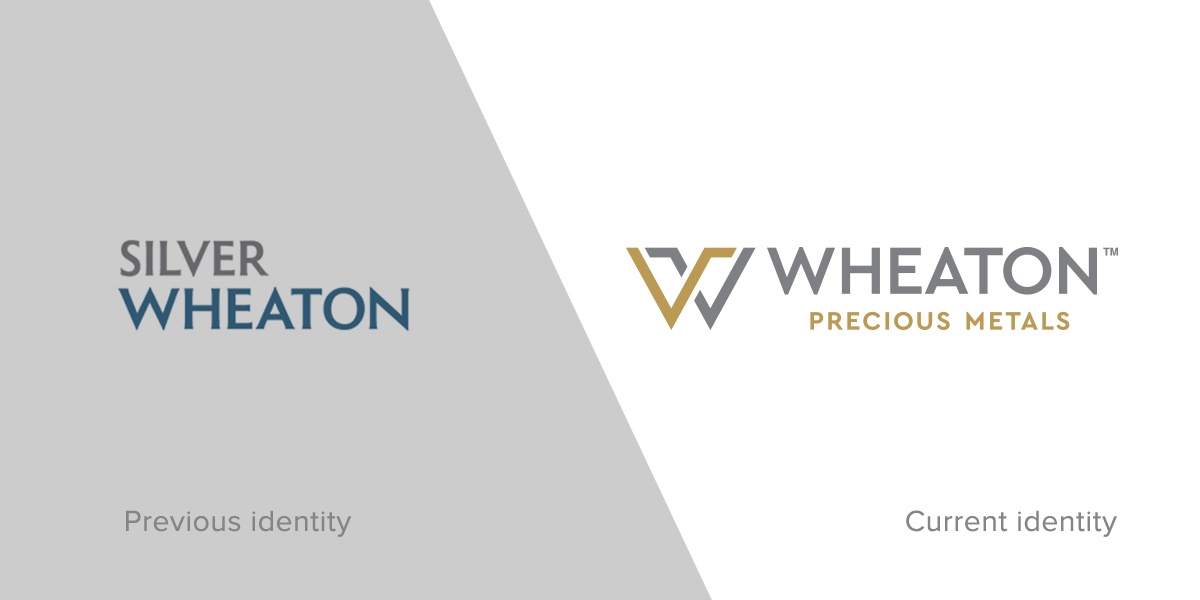
Wheaton Precious Metals is a good example. The name doesn't describe streaming agreements or explain a business model. It doesn't need to. "Wheaton" feels established, premium, and quietly mineral. It signals the category without chaining the company to any single metal or market. That's the test: does the name point in the right direction while leaving the destination open?
5. It’s loveable
The strongest names do more than function well. They invite emotional attachment. A name becomes lovable when it has personality, carries a story, and gives people something worth repeating. You cannot manufacture emotional connection on command, but you can create the conditions for it. This is where brand development intersects the naming category. That usually means a name is clear, distinctive, aligned with the brand’s character, and capable of carrying meaning over time. People rarely fall in love with safe, generic names. They respond to names that feel true and memorable.
We have used this process successfully to name a range of seniors’ residences. In many cases, the existing property names were generic and failed to reflect the distinct character of the place or the surrounding community. To create more meaningful options, we organized names into strategic categories–geological, historical, architectural, fauna, flora, nostalgia, and atmospheric–which helped ground the work in the region’s identity and gave a clear rationale to the names presented. The resulting selections, including Wisteria Place, Aster Gardens, and Fieldcrest, conveyed a much stronger sense of place, personality, and distinction.

This is how we evaluate names objectively. The framework comes from the good people at IGOR, the naming agency that developed it, and we've put it to work on dozens of projects. Once a set of candidate names has been developed, each one should be assessed against a consistent set of criteria and scored on a scale of one to 10.
Creativity matters in naming, but evaluation matters just as much. Once a set of candidate names has been developed, each one should be assessed against a consistent set of criteria and scored on a scale of 1 to 10. Here is our criteria:
Appearance
How well does the name work visually? Does it look strong in an ad, on a billboard, or in a wordmark?
Distinctiveness
How different is it from competitors in the category it will serve?
Depth
How many layers of meaning, association, or possibility does it contain? The best names often reveal more over time.
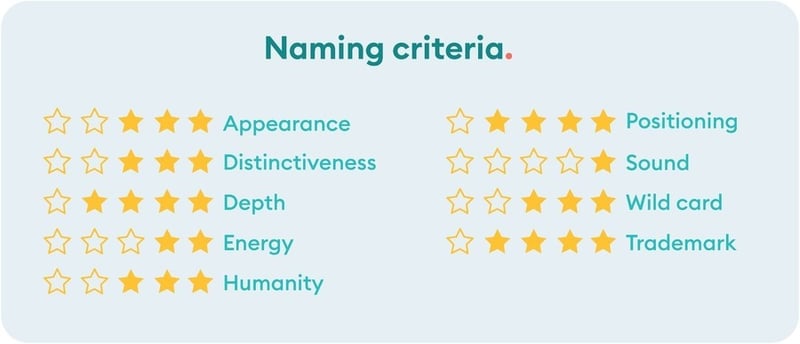
Energy
Does the name have momentum, vitality, and campaign potential? Can it carry a story?
Humanity
Does it feel warm, approachable, and relatable — or cold and distant?
Positioning
How well does it align with the company’s strategic position and core messages?
Sound
How does it feel when spoken aloud? Does it work equally well in casual conversation and formal settings?
The Wild Card
There is always an intangible factor. Sometimes a name simply has something special about it. Sometimes there is a subtle issue that keeps it from landing. This category captures that “instinct” you feel immediately about the name.
Trademark
This is the least subjective criterion of all: likely available, uncertain, or likely unavailable.
The process is arduous, and that’s a good thing.
Yes, naming can feel painstaking. It requires exploring many directions, discarding weak options, testing promising ones, and pressure-testing the survivors from every angle. But that rigour is exactly what produces the best outcomes. A structured evaluation process does not remove creativity from naming. It protects it from bias, short-term thinking, and premature decisions. That is how you arrive at a name that is not just interesting, but solid, strategic, practical, and emotional.
If our recent post was about how to get to a strong shortlist, this one is about how to choose the winner once you get there.
Want to see how we build that shortlist in the first place? Here's our step-by-step naming process.
And if you'd rather skip the whiteboard sessions entirely, our brand strategy team has named everything from global mining brands to seniors' residences. Let's talk.

Related posts