

We’ve had the good fortune to name global brands, flourishing boutique real estate companies, industrial companies, and senior living residences. Those may sound like wildly different assignments, and they are, but they all have one thing in common: a process.
A great name doesn’t appear out of thin air after someone stares at a whiteboard long enough. It comes from understanding the business's character, the competitive landscape, and where the brand is headed. If we’re going to hit the bullseye, you need to show us the target. The right name for a craft brewery is not the right name for a life insurance company, and thankfully, most people understand that without needing a workshop.
Over the years, we’ve developed a sure-fire process for naming companies and products, and we’re sharing some of that thinking here in case it helps you head in the right direction.
Why does a good name matter?
Because a name does real work.
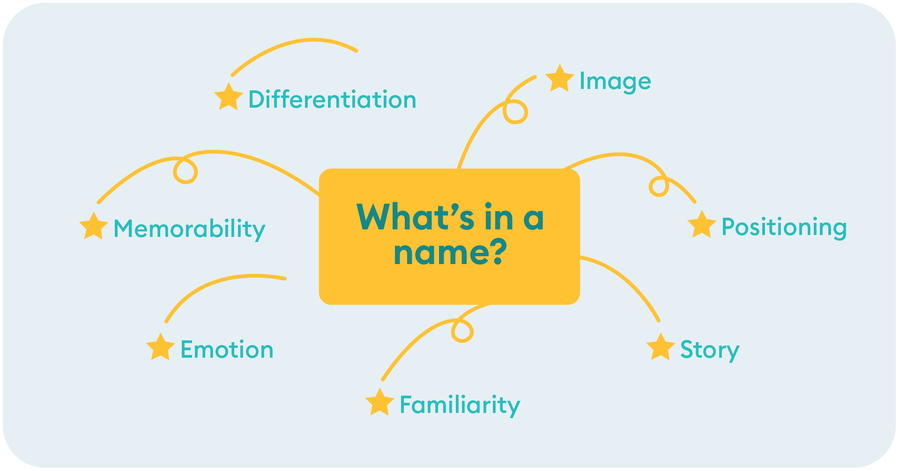
It helps shape perception. It supports positioning. It creates memorability. It gives your brand personality. And sometimes, if the stars align and the strategy is sound, it gives you that rare little spark that makes people remember you long after they’ve forgotten everyone else in the category.
A strong name can carry a surprising amount of weight in your marketing. It can help differentiate your business, signal what makes you distinct, and create the kind of emotional or intellectual response that invites interest. The best names feel inevitable in hindsight: clear, right, and difficult to imagine any other way.
The right name can:
- Differentiate you from competitors
- Reinforce your brand position
- Create emotional resonance
- Be easier to remember
- Suggest a story, image, or idea that supports marketing
- Build familiarity and momentum over time
Does your name have to describe what you do?
No.
That would be a descriptive name, and while descriptive names can work, they are hardly the only option. The idea that a company or product name must explain the business all by itself ignores how brands actually show up in the world.
Names do not exist in isolation. They appear on websites, storefronts, packaging, business cards, social media profiles, pitch decks, advertisements, news releases, and in conversation. In other words, a name almost always arrives with context. That context does a lot of the explanatory heavy lifting.
So no, your name does not need to spell everything out. It needs to work in context, support your positioning, and give you room to build a distinctive brand around it.
Naming is not a group therapy exercise
When evaluating potential company or product names, especially when management approval is involved, it helps to keep the conversation as objective and business-focused as possible.
Responses like “I like it,” “I don’t like it,” or “It reminds me of something negative” are perfectly human, but not especially useful. A brand name is a business asset. It should be evaluated against clear criteria based on how clearly it supports your positioning, how effectively it helps you stand apart from competitors, and how well it performs in the market.
That said, naming decisions are almost never purely rational. People respond instinctively, and those instincts absolutely influence the conversation. That is where the work gets interesting. The challenge is not to eliminate subjective reactions. It is to interpret them, separate the signal from the noise, and explain clearly why one name is stronger than another.
And yes, your ex-girlfriend’s dog’s name might be wonderful. That still doesn’t make it the right choice for a mining technology company.
So how do we get there?
We've had the good fortune to name global brands like Wheaton Precious Metals, along with flourishing boutique real estate companies, industrial firms, and a portfolio of seniors' residences across Western Canada. Wildly different assignments, and every one of them followed the same process.
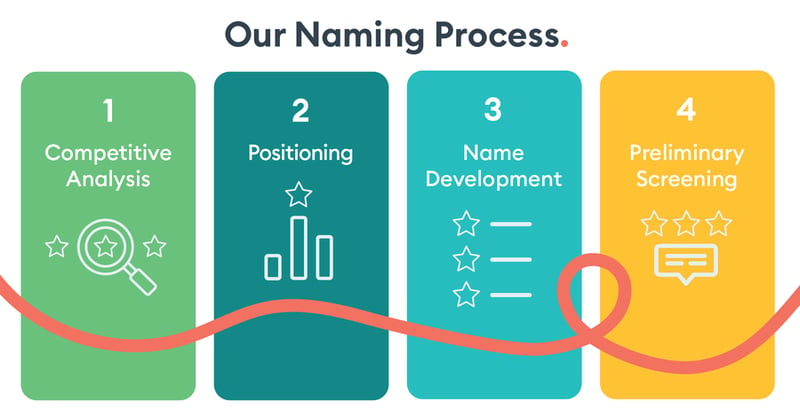
1. Competitive analysis
We begin by looking at the names your competitors use and evaluating their tone, style, and strength. This helps us understand the conventions of the category and where there may be an opportunity to break from them.
We ask questions like:
- Is there a common naming pattern in the category?
- Do competitor names project a similar attitude or personality?
- Is there an opportunity to stand apart in a meaningful way?
- Can your name highlight a differentiator your competitors are ignoring?
2. Positioning
Before we develop names, we need a nuanced understanding of what the name needs to do.
That starts with positioning. We work with you to understand where your brand has been, where it is now, and where it is going. We look at your strengths, your competitors, your market, and the opportunities available to you. A strong name is not just clever. It is aligned with a strategic position.
3. Name development
Once the positioning is clear, we begin developing names that fit the brief and support the brand.
That may include:
- Descriptive names that say what the business or product is
- Invented names that are built for memorability, sound, and distinction
- Experiential names that evoke a feeling or outcome
- Root-based names inspired by Latin, Greek, or other linguistic structures
- Evocative names that suggest a bigger idea, image, or attitude
There is no single “best” type of name. There is only the name that best serves the strategy.
4. Preliminary screening
Before presenting candidates, we can prescreen likely options for potential trademark conflicts, domain availability, and social handle availability.
This is not a final legal validation, and it should never pretend to be. But it can save everyone considerable time by identifying obvious problems early.
What happens after the name is chosen?
That is when the name starts earning its keep.
Once a final name is approved, we help build the supporting system around it: taglines, messaging, imagery, and the language that gives the brand personality in the real world. A good name is powerful, but it does not work alone. It works best when it is supported by a clear story and a consistent brand experience.
A name is not magic. But the right name, backed by strategy and delivered well, can be one of the most valuable tools your business owns.
So that's how we get to a strong shortlist. Choosing the winner is its own discipline, and we wrote about exactly how we score and evaluate names: What makes a good brand or product name?
Naming a company or product this year? Our brand strategy team would love to hear about it. Contact our branding experts.

Learn how to revitalize your brand so your company stays visible, relevant, and profitable.
Related posts